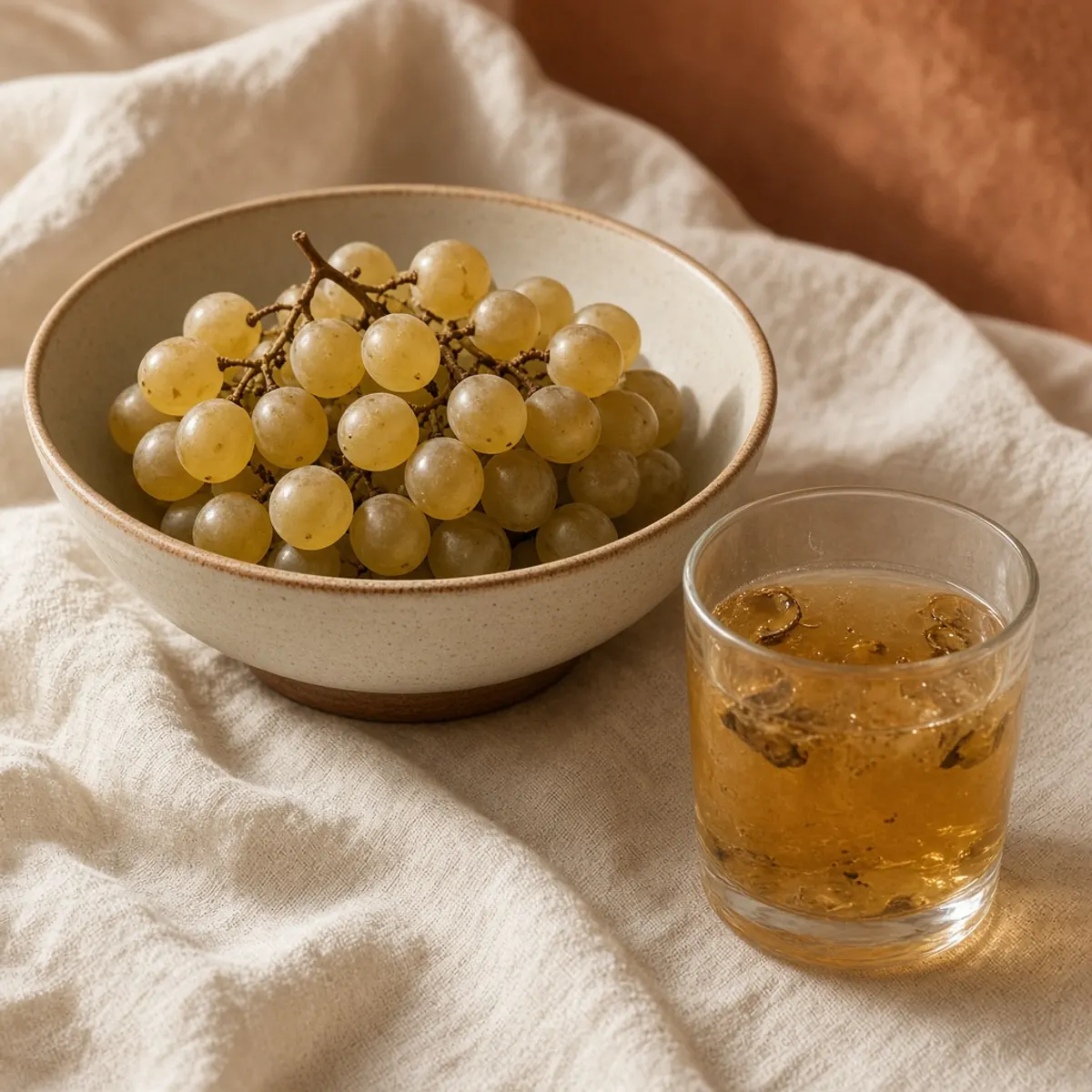
Skin-contact wine
Skin-contact wine is the method behind orange and amber wine: white grapes are crushed, and the skins stay in the juice long enough to stain it and change the feel.
Styles
Orange, skin-contact, amber, natural wine, and pét-nat. A short map of the styles people mix up under one orange-wine shelf.
Skin-contact wine is the method behind orange and amber wine: white grapes are crushed, and the skins stay in the juice long enough to stain it and change the feel.
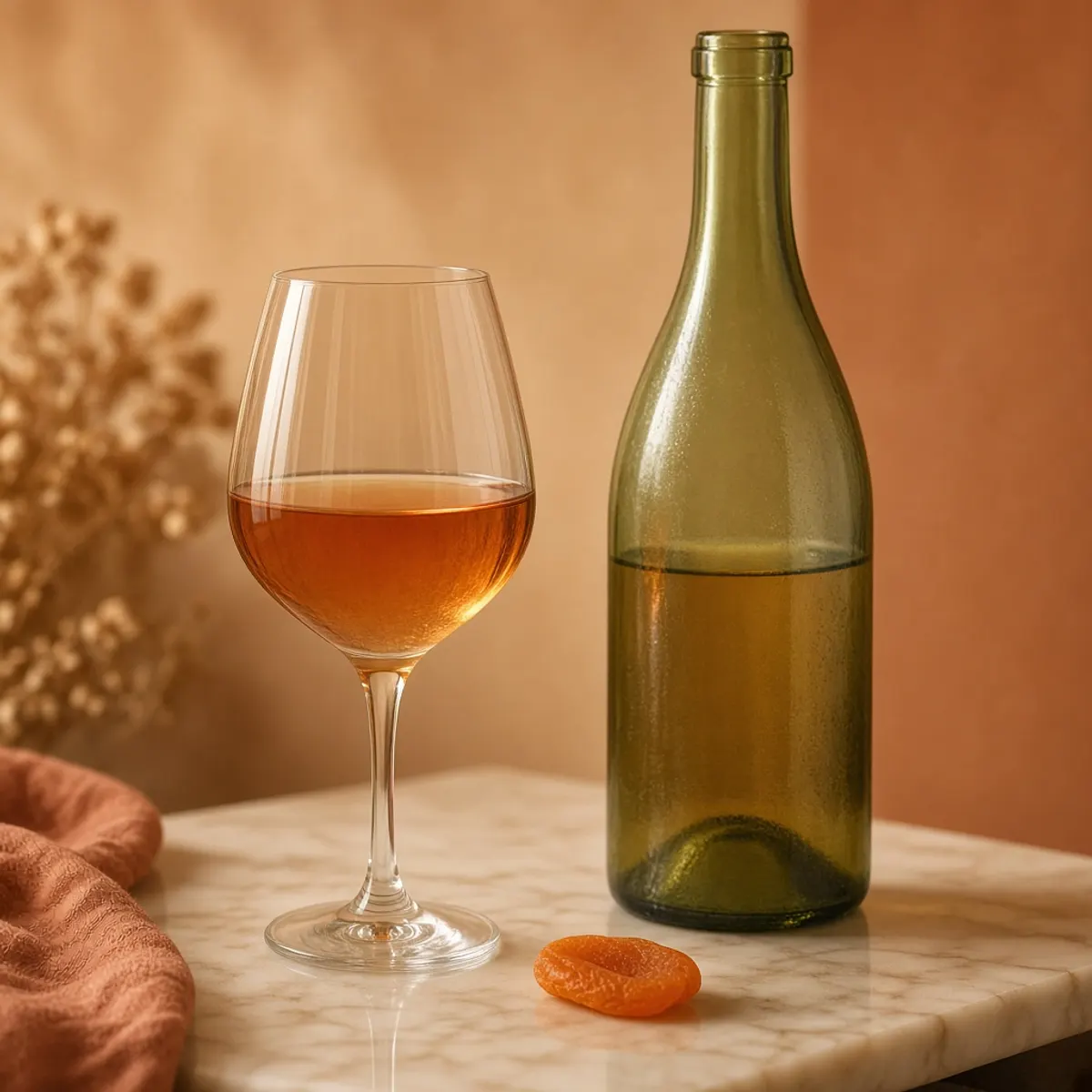
Orange wine is a range, not one flavor. The useful split is how long the skins stayed in the juice, because that decides the color, the tannin, and what you eat with it.
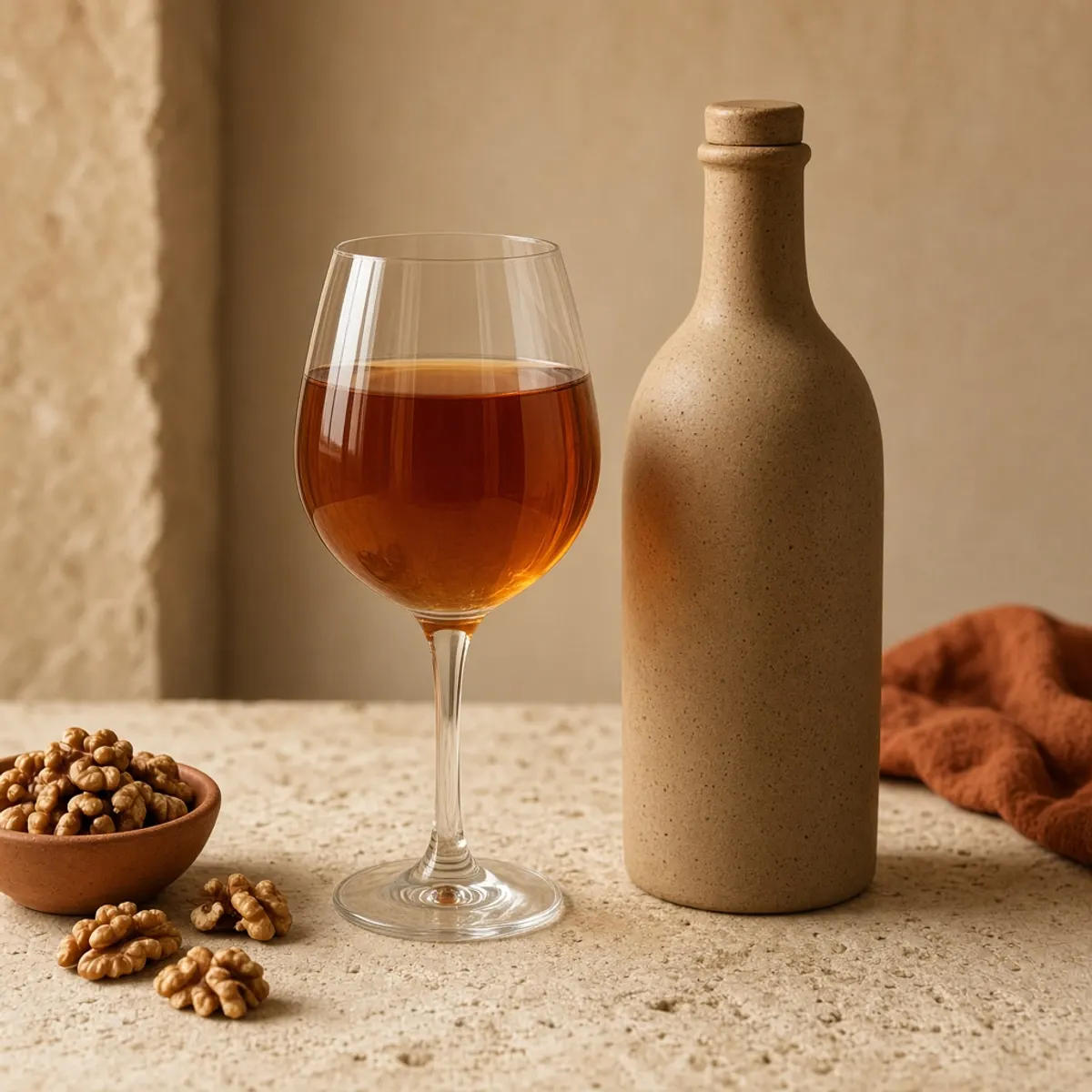
Amber wine names the deep end of skin-contact white wine: tea-colored, dry, and tannic enough to feel closer to a light red than to a pale white.
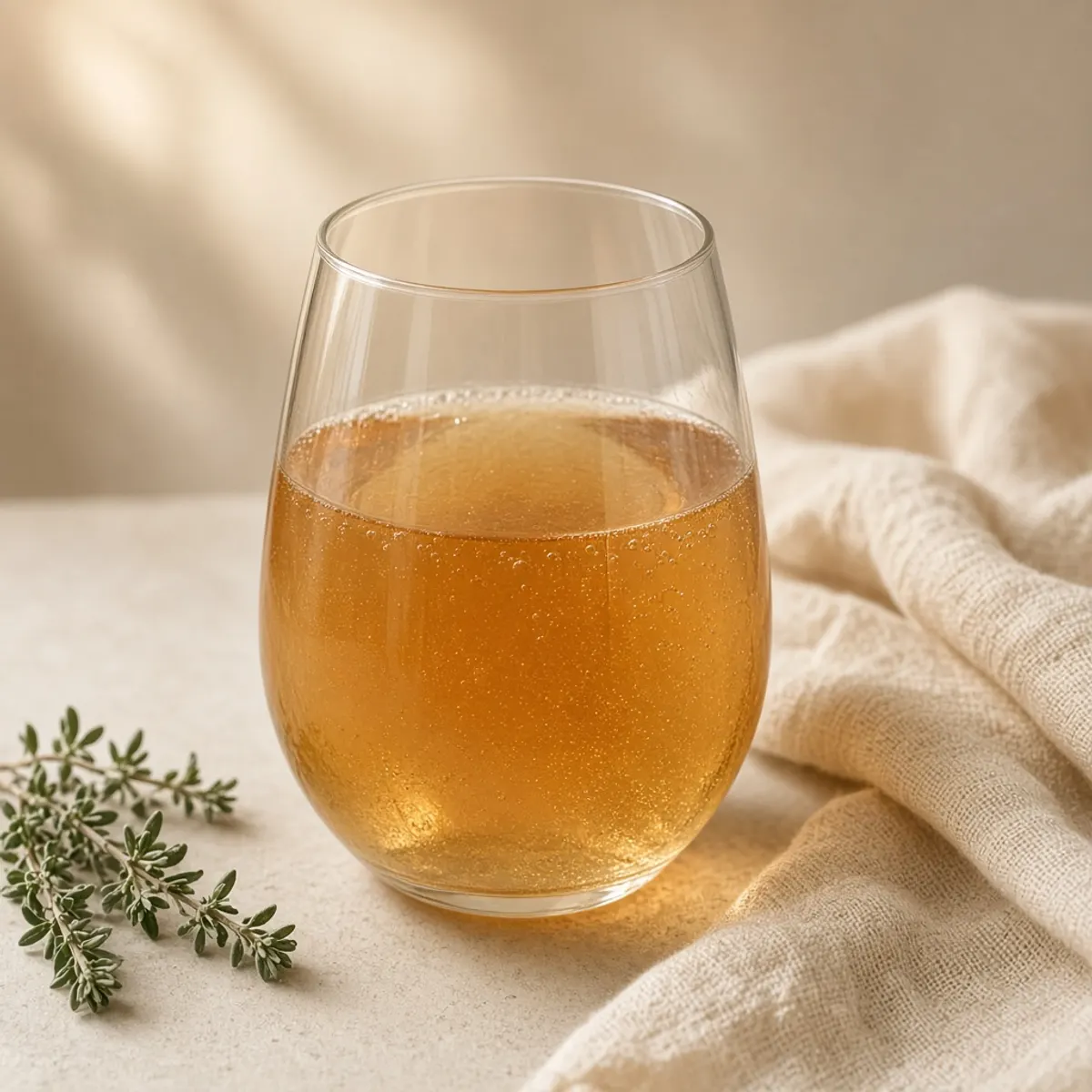
Natural wine and orange wine get shelved together so often that they sound like the same thing. They are not. One is a philosophy of farming and the cellar. The other is a color that comes from skin contact.
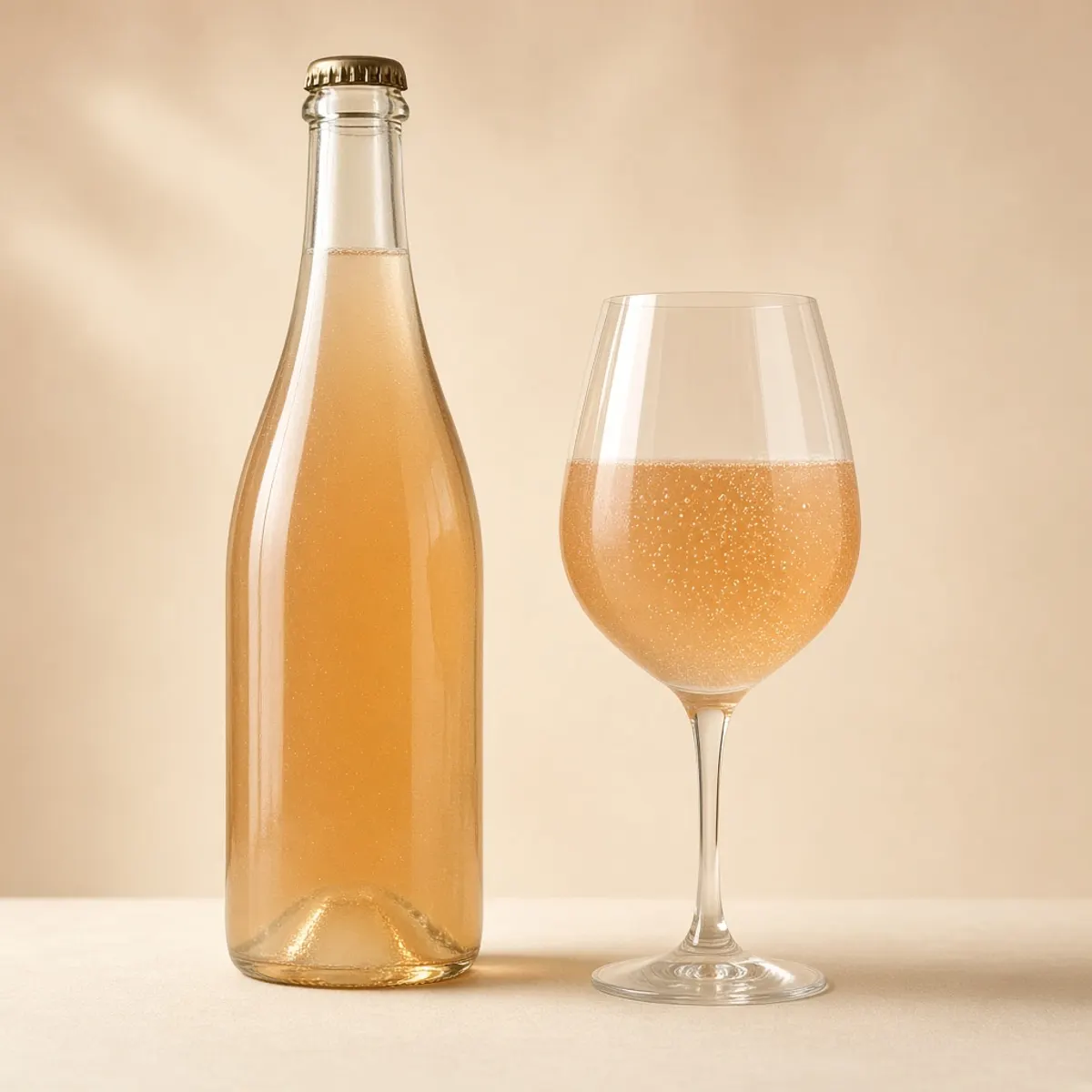
Pét-nat is sparkling wine that finished fermenting in the bottle. Some of it is also skin-contact, which is why it shows up beside orange wine. The bubbles are the point. The color is optional.