Related style
Pét-nat next to orange wine
Pét-nat is sparkling wine that finished fermenting in the bottle. Some of it is also skin-contact, which is why it shows up beside orange wine. The bubbles are the point. The color is optional.
Updated October 2026
What pét-nat means
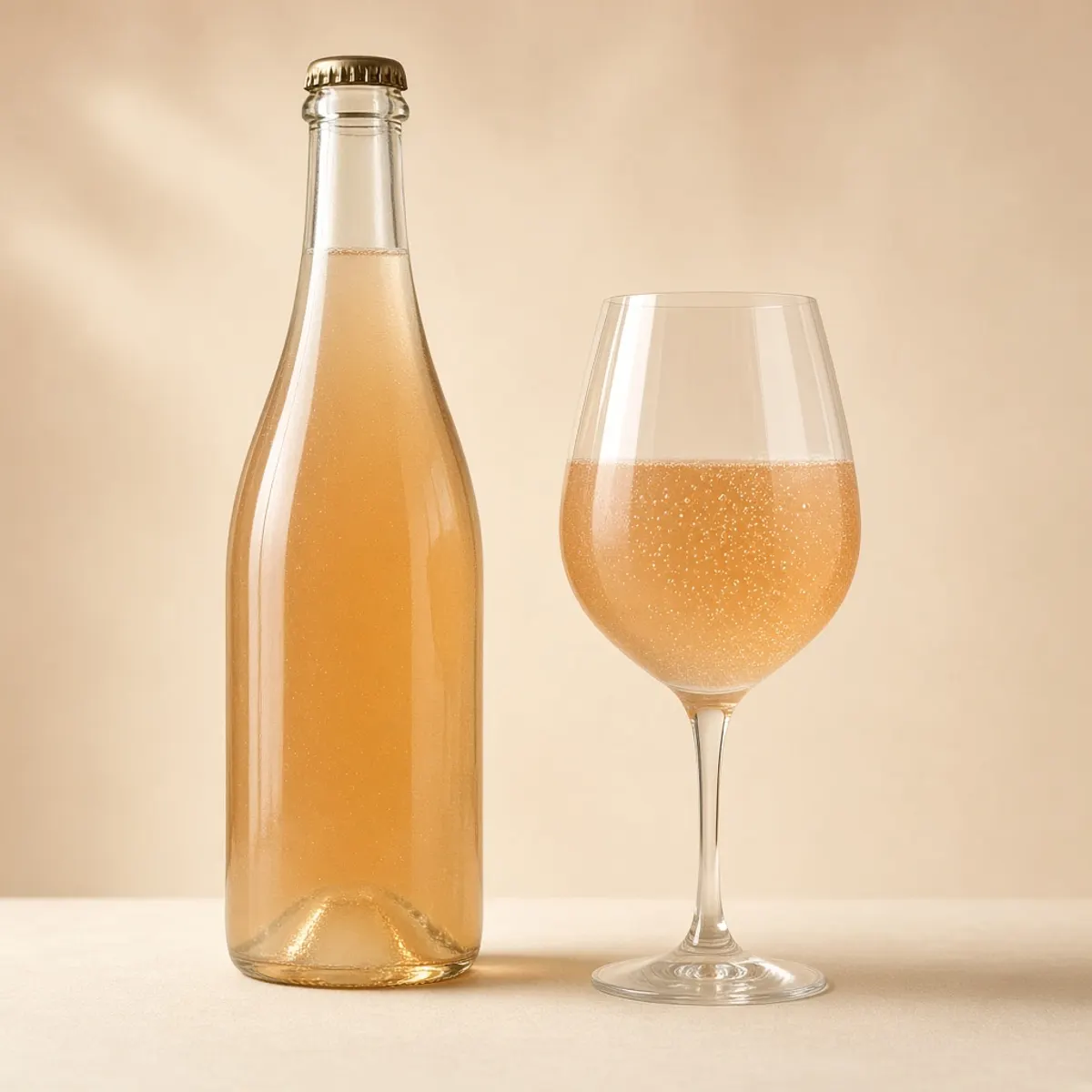
Pétillant naturel means naturally sparkling. Fermentation starts in a tank, the wine is bottled before it is finished, and the last of the yeast activity traps carbon dioxide. A crown cap is traditional. The wine is often cloudy because that yeast stays in the bottle.
It can be made from white grapes, red grapes, or a mix. It can be pale, pink, or amber. A red-grape pét-nat is not orange wine. A white-grape pét-nat with no skin contact is not orange wine either.
When it is also orange wine
If the base wine soaked on white grape skins, you get a skin-contact sparkling wine. That is the overlap: copper or amber color, a little tannin, and bubbles. Labels sometimes say amber pét-nat, skin-contact pét-nat, or simply show the color in the glass.
Treat it as a related style. If you came here for still orange wine, a pét-nat can be a bright side door, especially with snacks. It is not a substitute definition. The still styles live on orange wine styles.
How to drink it
Serve it colder than still amber wine, straight from the fridge or a few minutes warmer. Use a wine glass, not a narrow flute, so the skin-contact aromas have room. If the bottle is very cloudy, tip it gently once if you want the yeast mixed in, or pour steadily if you want the last glass clearer.
Questions people ask
Is pét-nat orange wine?
Only when it is made from white grapes that had skin contact. Pét-nat alone means sparkling. Orange means skin contact on white grapes.
Why does pét-nat sit with natural wine?
The method is old and simple, and many producers who work with few additions use it. The category is still a sparkling style, not a certificate of farming.