Compare
Orange wine vs white wine
Orange wine and white wine often start with the same grapes. White wine leaves the skins behind early. Orange wine keeps them in. Color, texture, and food are the results.
Updated October 2026
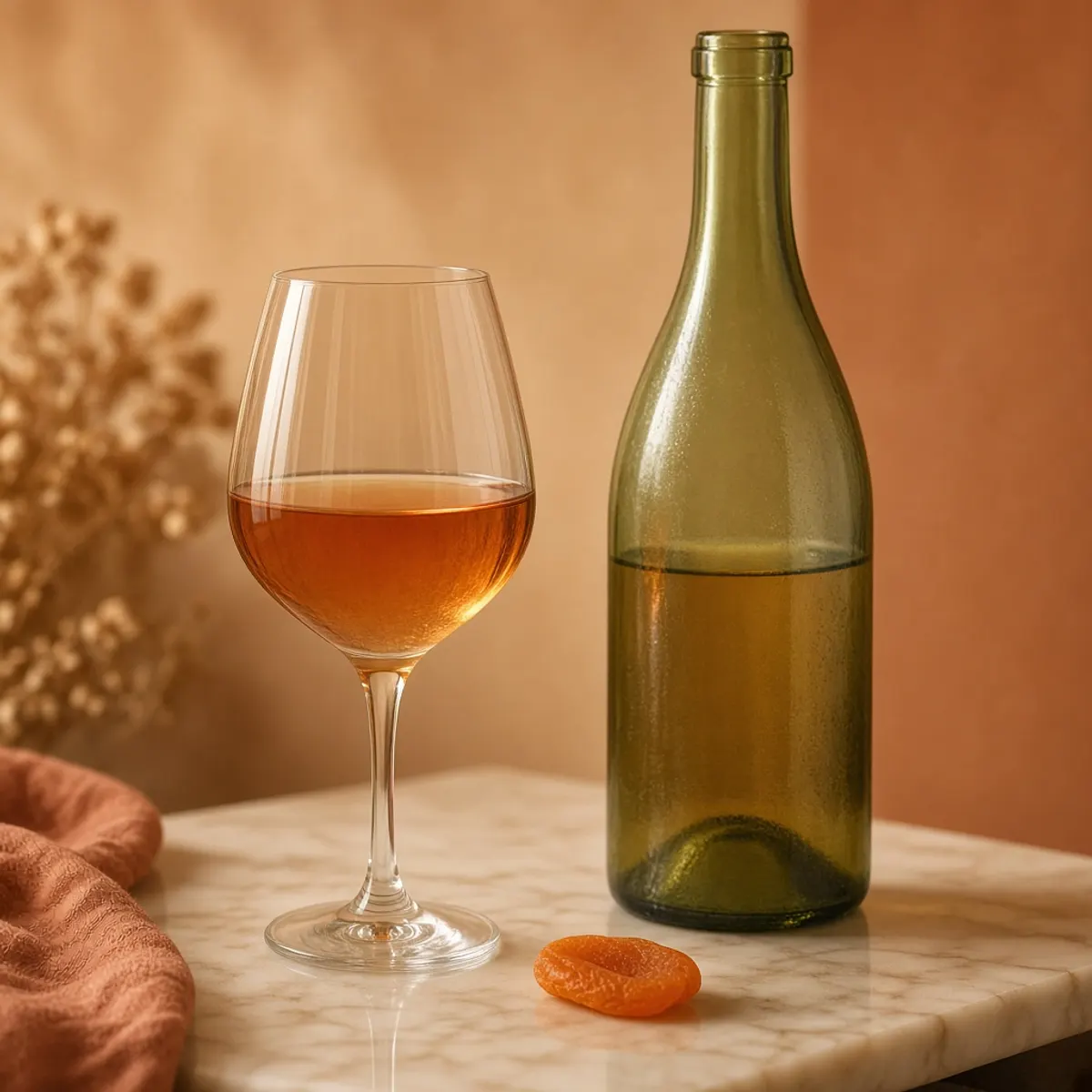
The one cellar choice
For a pale white, juice is separated from the skins quickly, then fermented. For orange wine, skins stay through a soak or through fermentation. Everything else — grape, region, oak, clay — can match or differ. Skin contact is the line.
That is also why a wine can be “a bit orange” without advertising it. Some traditional whites have always had a short soak. The modern name just made the choice visible.
Taste, side by side
White wine tends toward citrus, flower, stone, or oak, with acidity doing the structural work. Orange wine keeps some of that and adds peel, tea, herb, and tannin. The finish can feel drier even when the sugar is the same, because tannin dries the mouth.
Neither is more serious. A short-contact orange wine can be easier at the table than a heavy oaked white. A deep amber wine can be too much when you wanted a simple glass. Styles help you pick the weight.
Not the same as rosé
Rosé is the other skin-contact color people mix up with this. It is usually red grapes, briefly, so the wine is pink. Orange wine is white grapes, so the wine is gold to amber. A pale copper ramato can look pink in some light. The grape on the label settles it.
Questions people ask
Is orange wine a white wine?
It is made from white grapes, so producers and laws often still treat it as white wine. In the glass and at the table it behaves differently because of the skins.
Can I swap orange wine for white wine in a pairing?
Sometimes. Short-maceration wines stand in for textured whites. Deep amber wines are closer to a light red and can overwhelm a dish that wanted a pale white. Food matches keeps that split.